
Decision governance for defence fleet operations
Commanders deploy on assumptions. Vehicles break down on reality.
AutoHalo is a decision governance layer for mixed military vehicle fleets. It converts maintenance uncertainty into bounded, auditable decisions — before commitment, not after.
- Mission-capable probability
- 0.71
- Confidence interval
- ±0.06
- Vehicle class
- Wheeled tactical
- Driving factor
- Drivetrain/suspension
- Recommended action
- Pre-position 3 line items
Illustrative output. Synthetic data.
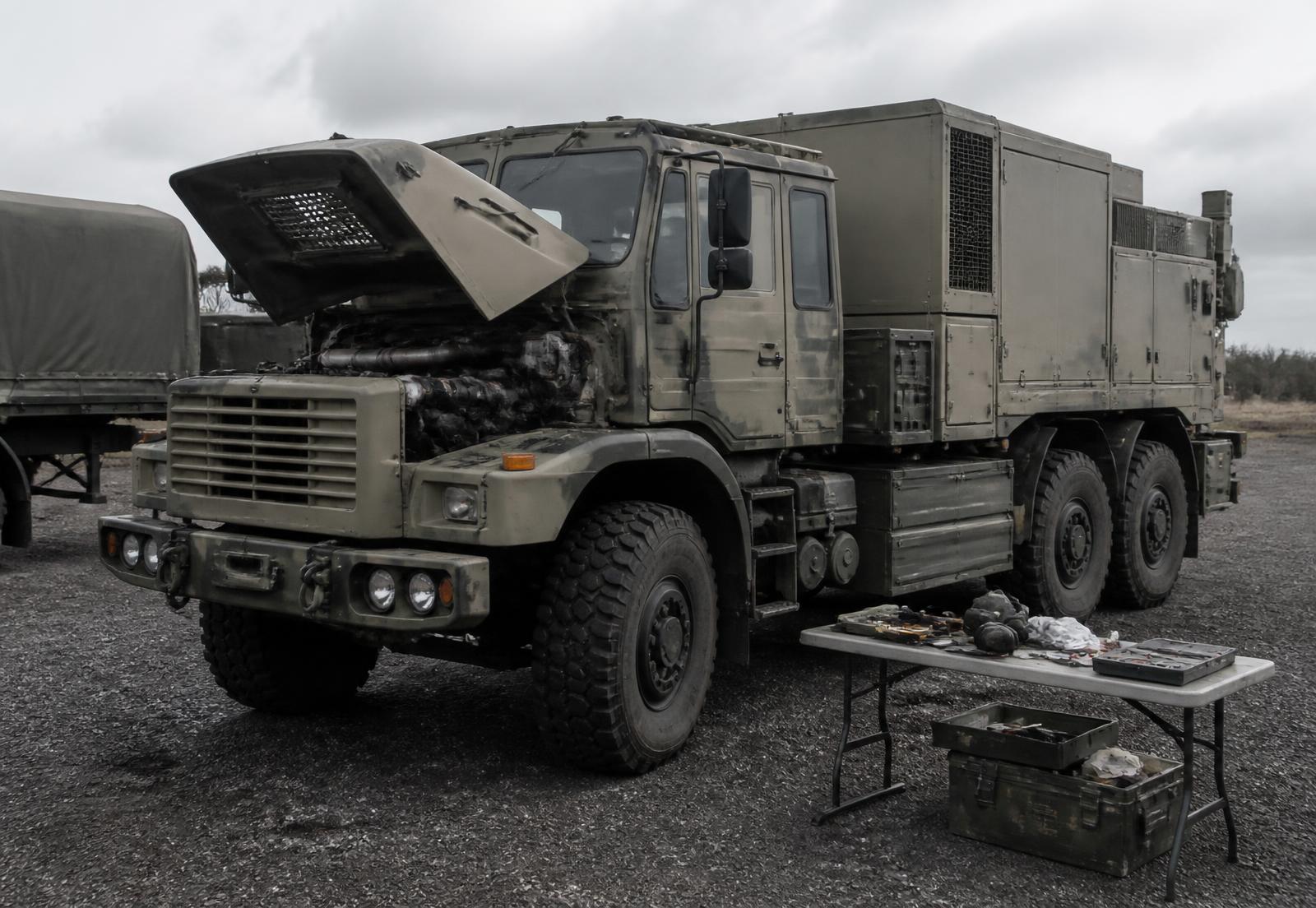
The gap is not between working and broken. It is between reported and actual.
Knowledge trapped in heads
Maintenance judgement lives with the individual technician, not in any system. It does not reach the officer making the deployment decision.
Reactive parts ordering
Spare parts are ordered after the fault is confirmed, adding lead time to every unplanned finding.
Assumed readiness
Readiness is reported from status codes, not from condition. It is tested for the first time at mission start.
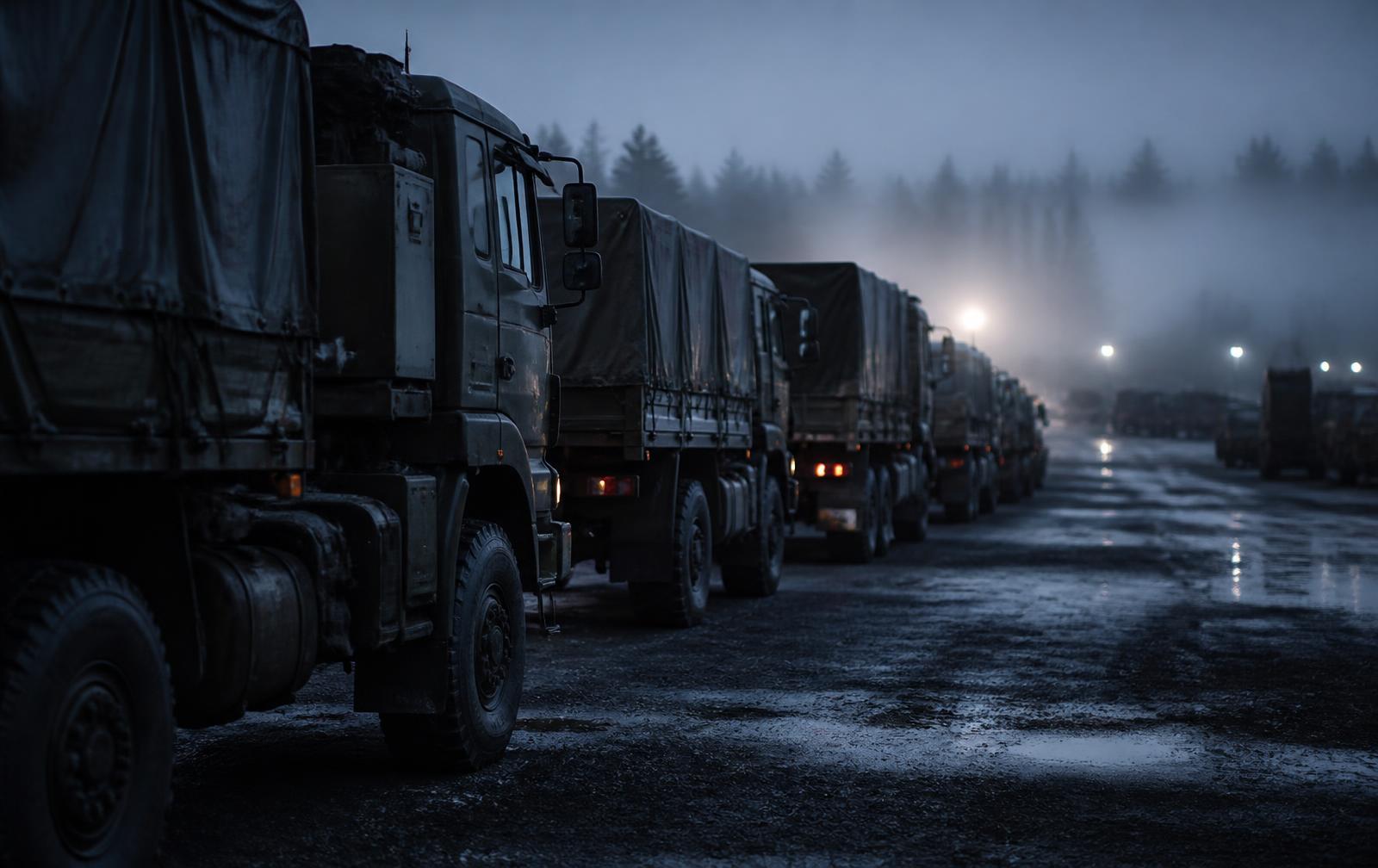
The operational risk is not that vehicles fail. It is not knowing which ones will.
The evidence is consistent across contexts.
74%
Average armoured vehicle availability
Availability under intensive operational use.
117/117
Reported ready, failed inspection
Vehicles reported mission-capable that failed subsequent technical inspection.
15/15
Maintenance events with unplanned scope
Every observed maintenance event exceeded the planned work order.
Source: independent field research, Sweden, 2026 (n = 15).
Field research was conducted independently by the founder. Findings and interpretations are the author's own and do not represent a position, endorsement or validation by the Swedish Armed Forces or any government authority.
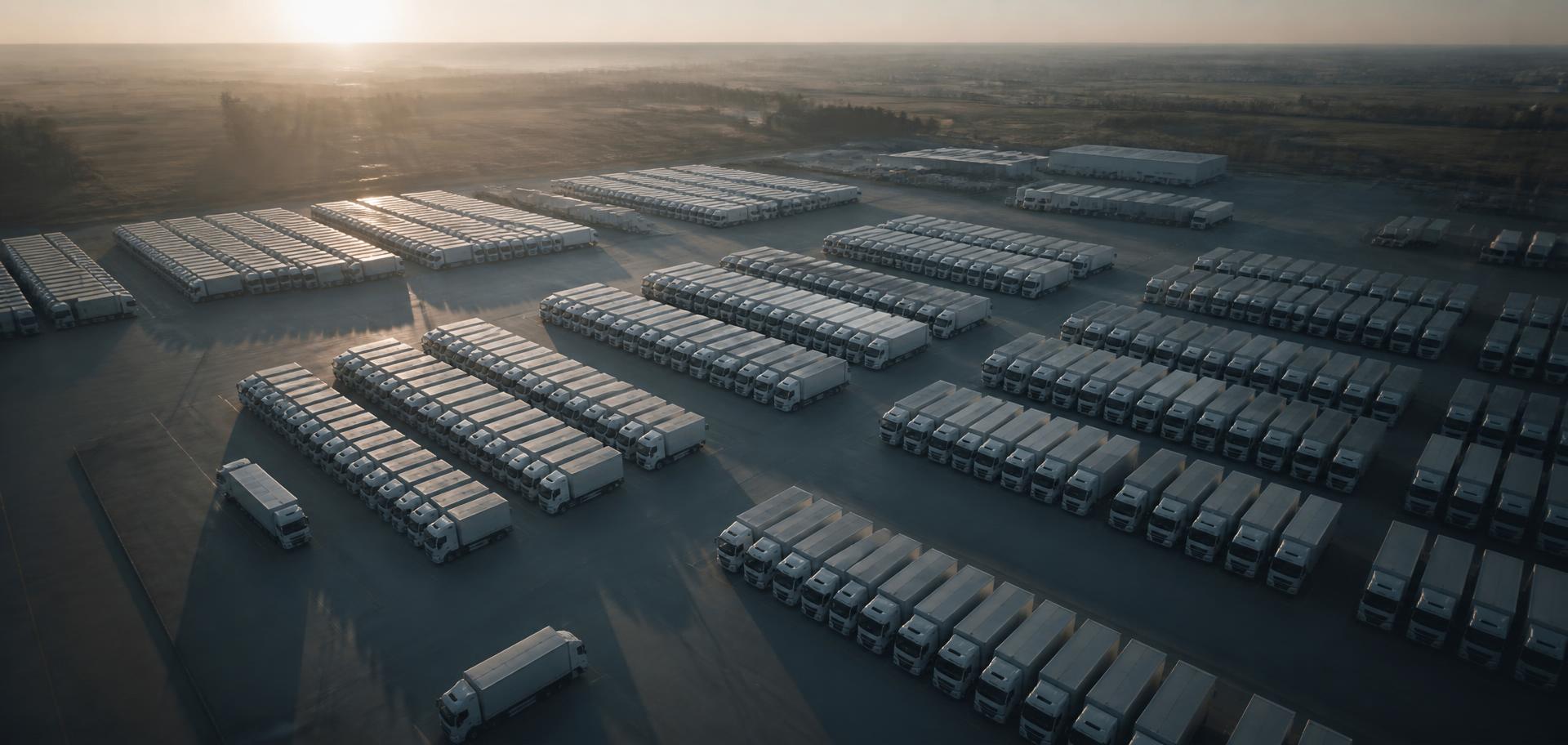
Reported readiness and actual readiness are not the same number.
Three structured outputs, delivered before commitment.
Not prediction. Governance.
Component attention likelihood
Per-vehicle ranking of components likely to require attention, derived from usage, mission profile and operational tempo.
Replaces: experience-based guessing at intake.
Fleet readiness probability
Bounded mission-capable probability for a defined deployment window, with an explicit confidence interval.
Replaces: reported readiness figures.
Pre-positioning trigger
Flags spare parts for ordering ahead of the maintenance queue rather than after fault confirmation.
Replaces: lead time incurred after discovery.

- Platform-agnostic
- No hardware
- No sensor retrofit
- No OEM integration required
- Operates inside existing workflow
Built for analogue, mixed fleets — because that is what most fleets are.
Most fleet and maintenance analytics tools assume clean telemetry and a single platform family. Mixed fleets have neither. AutoHalo starts from what already exists — work orders, deviation records, maintenance history and operational profile — and uses Bayesian updating to produce bounded estimates from limited initial data. Confidence intervals narrow as observations accumulate. No homogeneous datasets, sensor installation or OEM data access required.

- Mixed fleet by design
- One layer across wheeled tactical, logistics and support vehicles, regardless of manufacturer.
- No infrastructure precondition
- Starts from deviation records, not clean telemetry.
- Compounding data
- Every deployment improves estimates across more vehicle types.
- Defensible position
- No incumbent occupies the mixed-fleet governance layer. Existing systems are either locked to a single platform family or dependent on structured data pipelines that mixed fleets do not have.
Built to be procurable.
Ownership & jurisdiction
- AutoHalo AB · Swedish limited company · Reg. no. 559523-5184
- Registered office: Stockholm, Sweden
- Swedish-controlled ownership. No non-EU ownership interest.
Data & security posture
- Data processed and stored within the EU/EEA.
- No sensor retrofit and no OEM system integration required.
- Customer data is not used to train shared models without written agreement.
- Prepared to operate under a Swedish security protective agreement (SUA) where required.
- No ITAR-controlled components.
Security classification, hosting model and data handling are defined per engagement.
Henrik Karlsson
Founder & CEO
Officer, Swedish Armed Forces · 20 years of service · EMBA candidate, EDHEC Business School.
AutoHalo was founded on a single observation from operational maintenance environments: the maintenance problem is a decision problem, not a technical one.
AutoHalo is operated as a declared secondary occupation in accordance with Swedish public-employment rules.
Open the conversation.
Defence & fleet operators
For units and organisations interested in evaluating the governance layer in an operational context.
Investors & partners
For investors and strategic partners ahead of the first operational pilot.